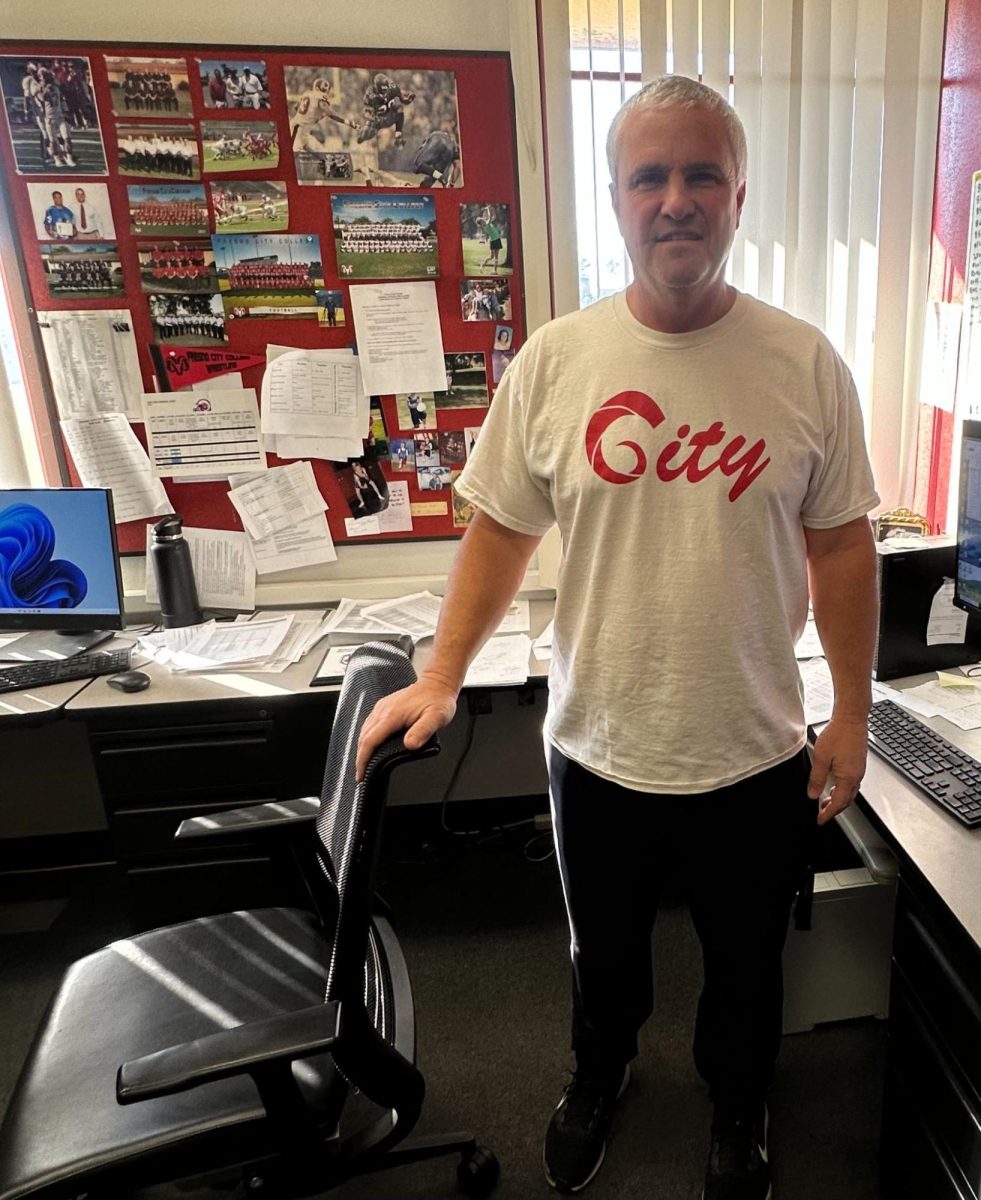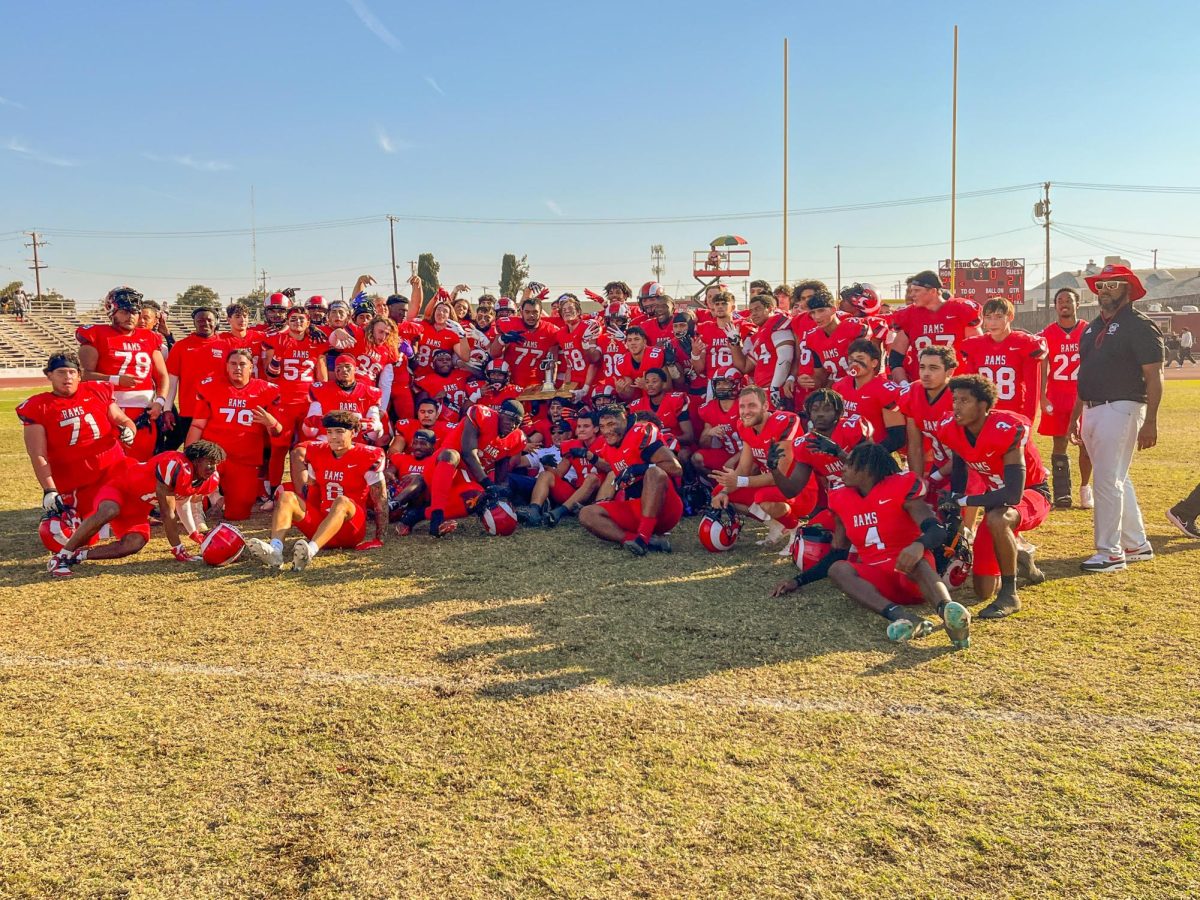

After 27 years, Fresno City College’s Tony Caviglia will coach his final football season with the Rams. But Caviglia isn’t thinking about the “bittersweet” thought of retiring. “I’m not sure if I’m happy or sad,” Caviglia said. “Just kind of numb. I’m really focused on getting our team ready to win.”
Caviglia spoke about his journey before coming to FCC and what eventually led to a long career.
“I had coached in the Big Ten for six years, spent time at USC, my family and I were moving a lot,” Caviglia said. “When the Fresno job opened, I wasn’t sure if it’d be five years, ten years or two. But 27 years later, I’m still here. It worked out. It’s been very positive.”
For 27 years, Caviglia has been at the head of FCC’s football program, through seven college presidents, multiple chancellors and many graduating classes. When he arrived in 1998, he had no idea he would stay this long.
“It’s gone by in a snap,” Caviglia said.
A Culture of No Excuses
Caviglia is most proud of all the players he has helped throughout the years, he talked about the transformation he’s seen in players and the impact he’s had on them.
“Watching guys develop from when they get here to when they leave that’s everything,” Caviglia said. “Seeing them come back years later with families, jobs and say, ‘Thank you for getting me on track,’ that in itself is all I really need.”
Caviglia emphasized that his program is player-driven and not coach-driven. His coaching centers on high standards, discipline and preparation. He teaches lessons that are meant to shape players as both athletes and men.
“We teach our players to have faith in the program and to trust us,” Caviglia said. “If they do the things they’re supposed to do, they’ll be ready for the next step in life. It’s about preparing to win in football and beyond.”
Defensive run game coordinator/defensive line coach Lyndell Hawkins has worked with Caviglia for 15 years and has a similar outlook on the program’s culture.
“No excuses, get it done, grind,” Hawkins said.
Hawkins said his first impression of Caviglia was a relentless worker with a plan and purpose.
“He’s just a grinder,” Hawkins said. “He goes to work. The biggest thing I learned from him is organization, having a plan and following through until you get the end result.”
Hawkins explained how that mindset extends to everything, from how practices are run to how the players are taught accountability.
“Make your bed in the morning, go to class and take care of yourself,” Hawkins said. “Football is just a small piece of the world you live in, and he makes that message clear every year.”

Growing With The Game
In Caviglia’s time at FCC, he has witnessed the game of football evolve. Whether it’s finding different systems or ways to help players reach their potential, he helps them improve all aspects of their game.
“The biggest difference now is that players have access to so much more information,” Caviglia said. “That’s neither good nor bad, it just means they’re smarter. But deep down, they still want the same thing which is to be successful.”
Caviglia believes FCC has helped maintain one of the most respected football programs in the state.
“We’ve always evaluated how we do things,” Caviglia said. “We’re constantly trying to get better and to give our players the best chance to develop and reach their potential.”
Impact on Players and Community
He believes FCC has been a helpful place for not just his career but all members and students in the community.
“It gives people another opportunity whether they’re athletes, returning students, or just trying to find a path forward. Thousands of success stories have started right here,” Caviglia said.
That sense of purpose and the relationships built along the way are what he’ll miss most.
“It’s all about the players and coaches,” Caviglia said. “The relationships that are forged through this program mean the world to me. That’s why you coach the game.”
Over the years many players have transferred to four-year universities, while many others have gone on to become coaches, teachers and police officers throughout the Central Valley.
“Think about 30 years worth of guys,” Hawkins said. “Police officers in Madera, teachers in Sanger, coaches all over this valley. When I go to high school games, half the D-line coaches are guys I coached. Imagine how many came through Caviglia, it’s huge.”

Stepping Away
At the age of 65, Caviglia said it simply felt like the right time to step away. He doesn’t yet have plans for retirement, but he’ll miss being around the players and coaches.
“I think it’s time for somebody else to put their stamp on this program,” Caviglia said. “I’ll have to find a way to fill that hole in my life.”
For Caviglia, success isn’t found in the win-loss column. It’s measured in the lives he’s impacted and the players who’ve stayed in touch years later to thank him for helping them find direction.
“Some guys I don’t even remember right away,” Caviglia said. “But they tell me that because of their two years at Fresno City, they were able to reach their goals. That’s the number one thing I feel good about, giving kids a second chance.”
As his time at FCC winds down, Caviglia leaves behind more than a coaching legacy. He leaves behind a community shaped by his belief in hard work, integrity, and the idea that success in football and in life begins with never giving up.