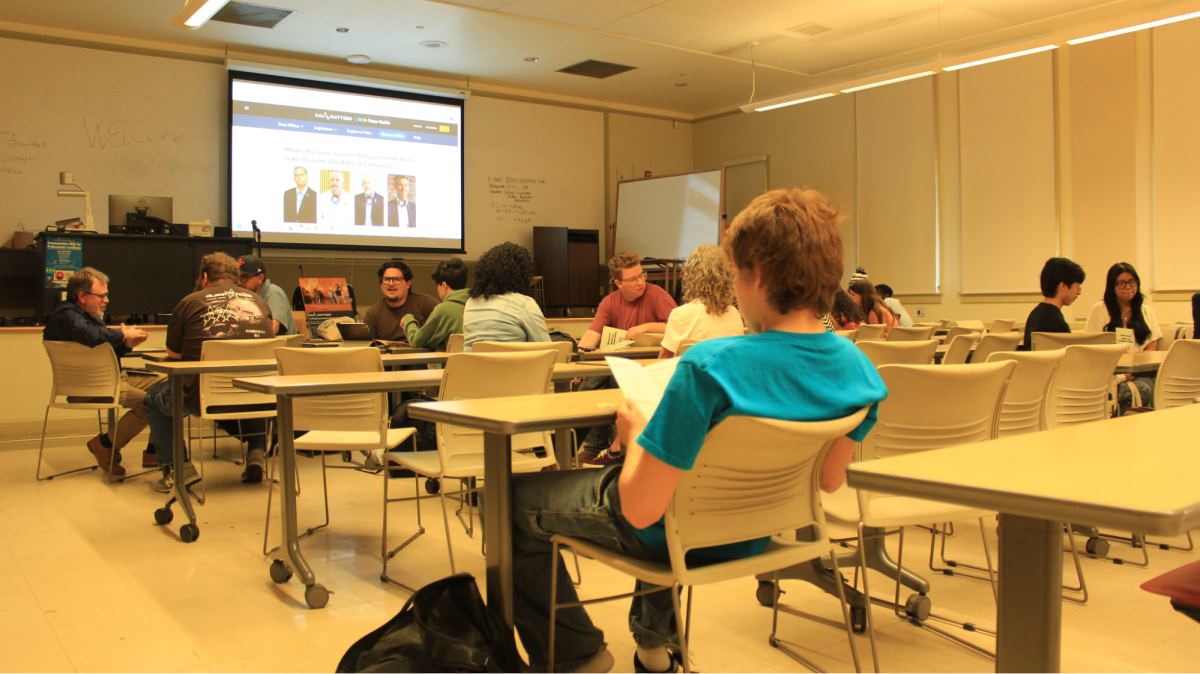
Fresno City College invited the non-profit news organization CalMatters to hold a VotingMatters event on campus May 7. During the event, students learned about the upcoming gubernatorial primary race. May 18 is the final day to register to vote for this election, and June 2 is the final day to cast a vote.
Calmatters produced a voting guide, available on its website, designed to help voters understand the top candidates’ positions on important issues.
According to polls, the current leading eight candidates are Xavier Becerra, Chad Bianco, Steve Hilton, Matt Mahan, Katie Porter, Tom Steyer, Tony Thurmond and Anonio Villaraigosa. They were all interviewed on topics like affordability, taxes, housing, unhoused, climate, Trump, justice, health care and artificial intelligence on the CalMatters site.
Another addition on the website is an interactive quiz with 11 questions that focus on the issues above. Each question shows different stances on each topic given by the top eight candidates. At the end, the answers are totaled to show the taker which candidate most closely shares their values.
California operates under a jungle primary system, meaning that the top two candidates, regardless of party, will move onto the election in November. In most other states, Republican and Democratic candidates do not square off in the primary.
Some worry that by splitting the Democratic vote between the top six candidates, while Republicans only have two top candidates, the two possible future governors on the ballot in November could be both Republicans.
As of May 4, the top four candidates are former Fox News host Steve Hilton (Republican), former Health and Human Services Secretary Xavier Becerra (Democrat), Riverside County sheriff Chad Bianco (Republican) and environmental advocate and investor Tom Steyer (Democrat).
Becerra and Steyer share a view on how California should handle taxes; higher taxes on wealthy people and large corporations. Steyer and Becerra also agree that the way to make California more affordable is to build new houses as soon as possible.
Regarding health care costs, Steyer and Becerra both say to adopt single-payer health care, a state-run universal system that replaces private insurance.
However, when it comes to artificial intelligence (AI), Becerra wants to ensure that AI technology is helpful to workers and doesn’t mass-replace human workers. Steyer, on the other hand, wants to collect a fee from AI usage to pay for services such as financial support for displaced workers.
On the Republican side, Bianco and Hilton want income tax breaks for all. On making California affordable, Bianco wants to lower the price of gas by getting rid of many environmental regulations and Hilton wants to cut regulations on businesses across the board.
On the subject of health care costs, Hilton believes that health care is not the highest priority and California can’t do it alone, but it does need improvements. Bianco wants to target waste and regulations on hospitals that contribute to high costs.
With artificial intelligence, Hilton wants students to be prepared for whatever the future holds, and Bianco believes that AI has benefits and drawbacks and to be wary of how it can be used negatively.
During the FCC event, attendees watched video clips from the candidates’ interviews discussing affordability. The candidates in this race all have a wide variety of opinions on how to address California’s affordability crisis.
“Not everyone is aware of what this person [gubernatorial candidates] stands for,” Charlene Xiong, an FCC student said. “People just know ‘vote for this party,’ but not necessarily what the candidate wants to do as an individual.”
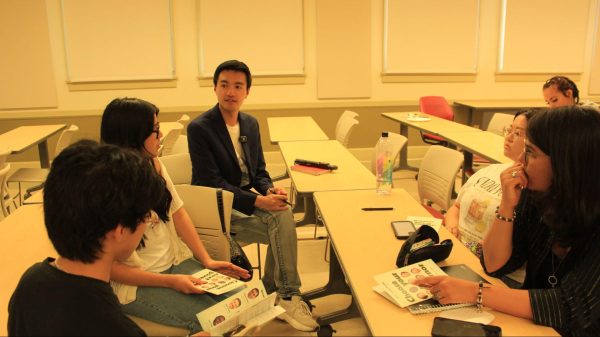
The event was led by Dan Hu, the director of partnerships at CalMatters. He said that democracy only works if people engage.
“Democracy engaging means showing up, talking to your neighbors. At the start, it could be protesting, it could be all these other things, calling your city council member, but at the most basic level, it’s talking to each other,” said Hu.
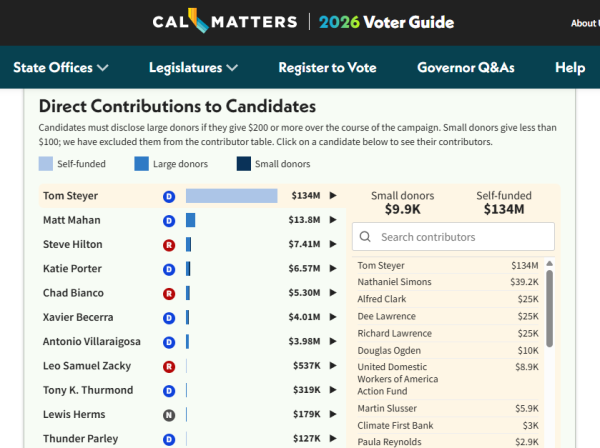
The CalMatters voting guide also shows who has donated to each candidate’s campaign and how much.
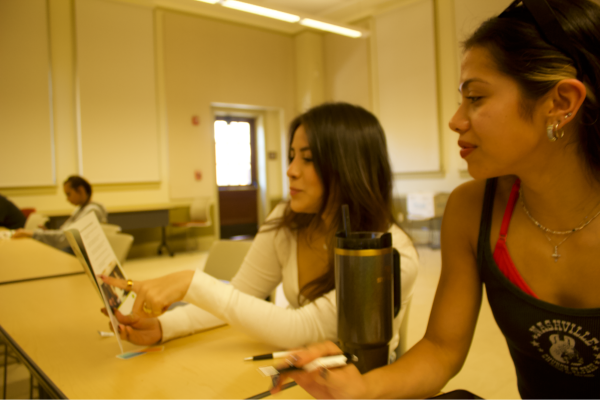
“I think introducing the website was really smart. He showed us how to see which corporations and companies are founding these candidates. If you know this company I’m boycotting is donating to this one person’s campaign you can see maybe there are some underlying problems that might not align,” FCC student Sarah Trujill said.