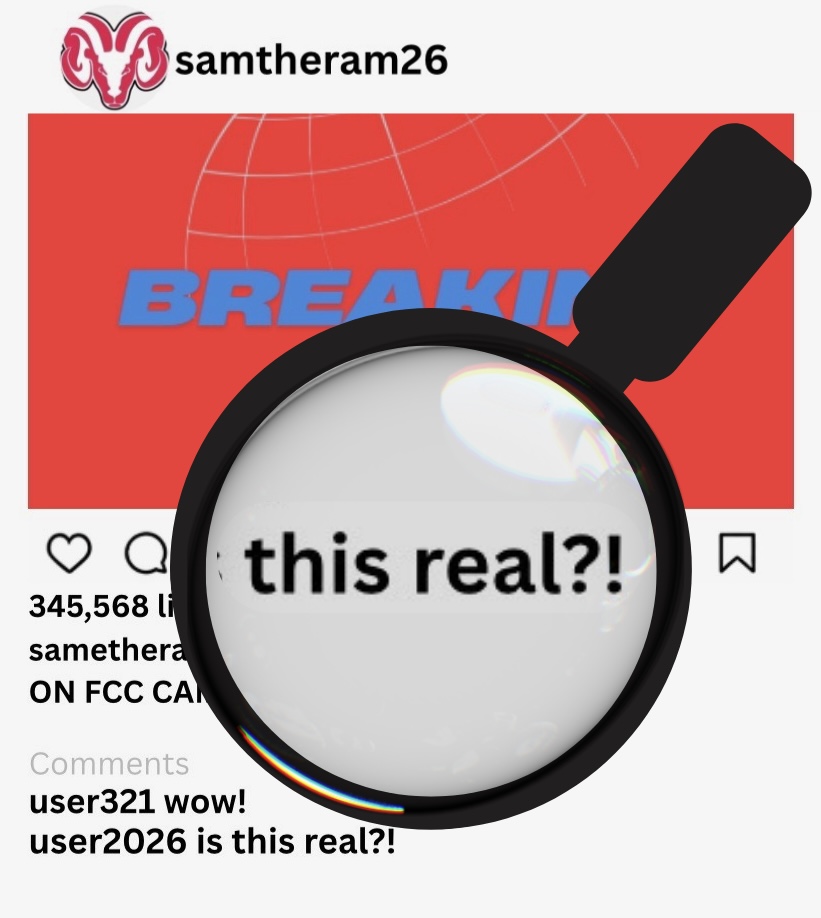
“BREAKING NEWS” is the first thing you read as you pick up your phone, at 7 a.m. You scroll through stories, posts, reels and tweets seeing story after story of last night’s breaking events. You’re panicked, afraid and confused.
Face it, you trust the internet too easily. The fast paced news is easy to swipe, read a title and move on.
But social media is the easiest way for someone to twist a story any way they want you to see it. One caption, one edit, and suddenly the story is completely flipped.
I’m not here to kick you down, because I have also fallen victim to the fake news scam. Everytime I open Instagram I see a fake claim. Even if I know it’s fake right away, they’re still out there and sometimes it’s not always noticeable right away.
In 2023, I started to keep a closer eye out for fake news after two false stories convinced me they were true. The first was the plane that returned 37 years later, and the second was the claim that Disney World got rid of Cinderella’s Castle.
While both headlines caught my attention quickly, after some quick research I found that both stories were a hoax.
Although it’s embarrassing to admit this publicly, it happens to us all. The evidence that makes you believe the story, the multiple back-to-back videos in someone’s feed, they can really pull you in. Yet when it came time to look it up, Google called you out each time, proving the stories weren’t real.
According to Pew Research, 86% of adults get some news from social media, and 54% report using social media as a news source often. Every year, the number of people using print, radio and even television broadcast media is declining.
Pew Research reported that 46% of adults have shared some news on their platform through posts, comments or videos.
Reflect on your social media usage. How many posts have you made, comments you’ve sent or stories you’ve reshared? From breaking news on recent events around Fresno, to police activity across the country, you see “breaking news” everywhere whether it’s truly breaking or not.
We’re all guilty of it. When a friend reshares a post, suddenly it goes viral and everyone’s reporting the recent event. But without context, who knows what’s really happening.
The Rampage conducted a survey on Instagram, asking Fresno City College students where they get a majority of their news. Of 50 replies, 88% of students said their primary source for news was social media. Only 8% stated they received their news from local news networks.
Compare these results to those conducted by Pew Research, we see a major increase in social media reliance as generations continue.
But these platforms are designed to pull you in, by using buzz words that capture your attention and get you to click. And those stories almost never tell you what they’re promoting. Instead it’s a false rumor that can quickly twist your perspective on someone or something.
In 2024, Donald Trump was shot in the ear at a rally. Reports circulated on social media saying that the Secret Service officer assigned to protect Trump was told not to fire at the sniper. That news was later debunked. But within a few minutes, many people believed the story protecting the shooter. In reality, the sniper was taken down immediately.
In order to prevent the spread of misinformation and better your own understanding of news, here’s how you can apply media literacy skills.
Before clicking “share”, ask yourself “where is this coming from?” Is it a reliable source, or a random spam page? Then fact check your facts. If something looks suspect, look it up!
When doing research I typically turn to a trusted account. Locally, KSEE24 Instagram and website will give you information once they can. Visalia Stringer on Instagram is always on watchdog, keeping the community around Visalia informed. This is also great if you take the 99 because they post traffic updates.
I also follow first-hand sources like politicians, the White House, sports teams and celebrities. When someone releases a statement themselves, I trust it more (note; this is different from them reposting a second-hand story). I have an account on LinkedIn and Indeed and they each release statements on different events around communities daily.
When looking things up, AP News, Pew Research, NPR and more are all great sources. You have to dig around though, sometimes the underdog will have something too! Just be mindful of who’s telling you the story.
Strengthening media literacy takes effort, but it is possible. Here’s a few tips to help you stay informed properly.
Monitor your screen time. Social media keeps you coming back with its constant dopamine hits every time you see a new video or picture. Be mindful of the time you’re spending on your phone and what you’re doing on it.
Check the accounts you follow. Is the account you’re getting your main source of information from a credible account that you can research and find the voices behind? Or is it someone with a spam account, wrapping others around their finger?
When something comes out, research it. Check multiple sources, see who else has released a statement. Check to make sure credible research and/or news outlets have spoken up.
Overall, be mindful of your news intake. It’s very easy to get caught up in what travels quickly around social media. Keep yourself properly informed and aware.