Fresno City College’s Associated Student Government (ASG) held an informational meeting that gave students the opportunity to learn about their individual rights and FCC’s immigration policies.
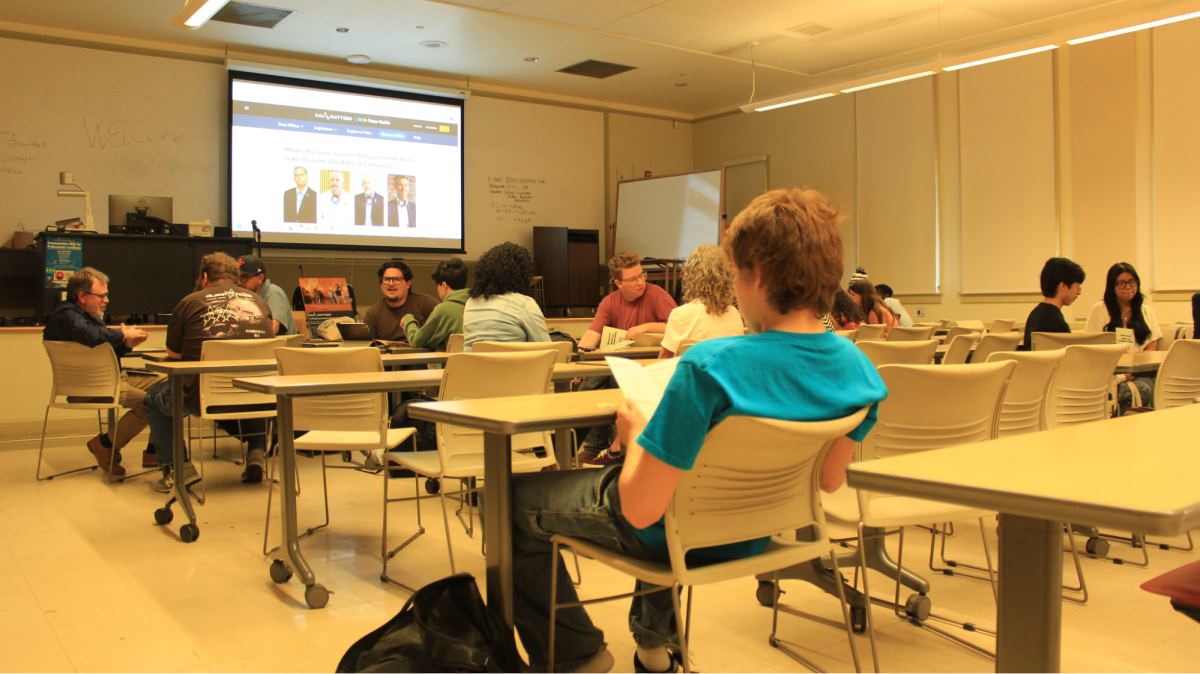
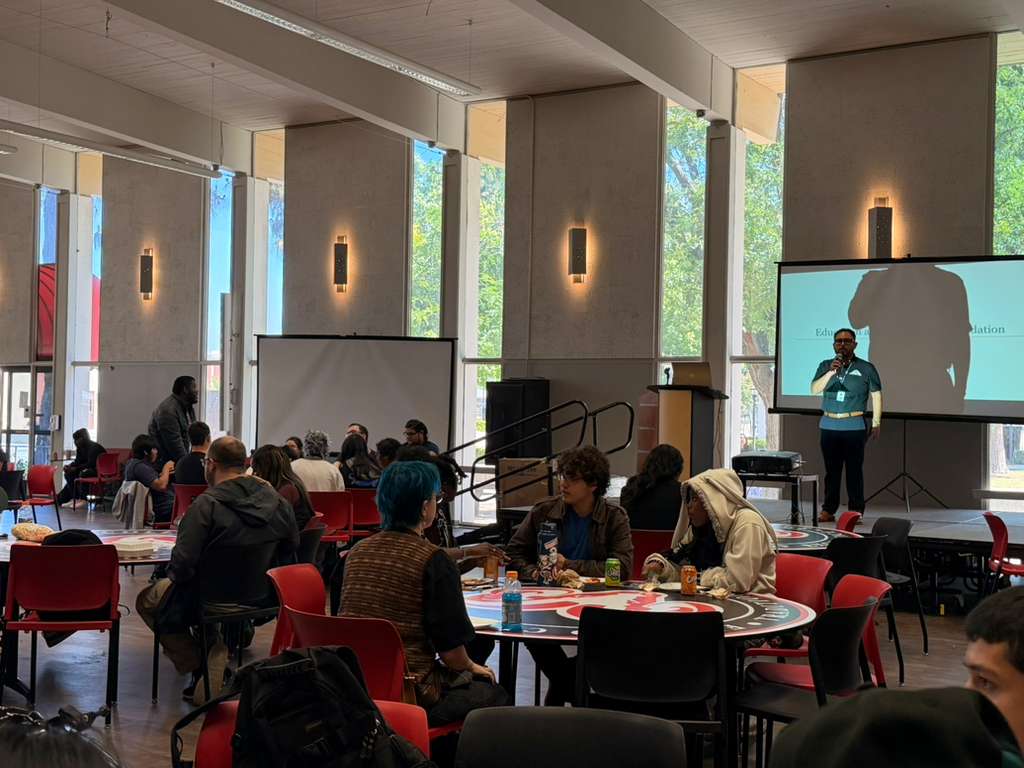
On April 23, ASG put on a seminar for students regarding immigration rights. The first speaker was a representative from the Education & Leadership Foundation, a non-profit organization that provides immigration and education services to people all across the valley. The other speaker was Rigoberto Garcia Santa Rosa, an ethnic studies instructor and a club advisor for MEChA (Chicano Student Movement of Aztlán) at FCC. Garcia spoke on the State Center of Community College District (SCCCD) policy regarding immigration.
Speaker Gustavo Gasca Gomez, the project coordinator and community-educator for the Education & Leadership Foundation, spoke to students about their individual rights when it comes to immigration.
Gomez discussed how local law enforcement and ICE can’t inquire about a person’s immigration status in California. Local law enforcement also cannot give information to immigration officials under California law.

Gomez informed the audience of the importance of knowing current immigration protocols.
“Everybody should understand what their rights are. It may not impact them directly at that moment, but I can almost guarantee, even if they’re not aware about how some of their fellow classmates are currently impacted and being impacted by these issues,” Gomez said.
Gomez believes it’s important for students to know their rights for their own protection and for their community’s safety.
“Never put yourself in risk or in danger, but understand that the information that you carry and that you learn, just like education in general, academics is supposed to be for the betterment of your community, so that individuals, when the time comes know what is right, what is not, what is allowable, what is not,” Gomez said.
Gomez explained how knowing individual rights can help people at risk be at ease if they ever find themselves in an engagement with immigration or law enforcement.
Understanding the constitutional rights when it comes to immigration enforcement is especially important to students who may not know how to properly respond to these situations. This helps avoid unnecessary panic and can help keep members of our community protected.
Gomez explained that it is more important than ever for students to look out for one another, and under no circumstance should they reveal sensitive information about someone else’s legal status to any law enforcement agency.
The Trump Administration named immigration their top priority. The ICE budget has grown exponentially in the time that Trump has been in office, now being the highest funded enforcement department in the United States. This has been increasingly enforced since the One Big Beautiful Bill Act which was passed in July 2025.
Gomez discussed what to do if at risk and in the vicinity of ICE agents. Do not run. This might lead to your arrest or worse if you get caught trying to escape. Do not speak to immigration officers unless asking for a lawyer. You are not required to tell the immigration officer where you were born, your nationality or what your immigration status is. Do not show immigration officers your paper. This goes for all identification papers. Just insist on a lawyer and refuse to cooperate. Do not consent to a search and do not surrender belongings to ICE.
“Our students, a lot of them are from vulnerable status or international students, and I think it’s really important that they understand what policies and procedures exist here on campus,” Garcia said.
According to Garcia, Immigration officers are only allowed to roam public spaces. They need a warrant or permission to enter non-public spaces. Public spaces on campus include the quad, cafeteria, libraries and the auditorium. However, classrooms and administrative buildings are considered non-public spaces.
Immigration officers can’t enter classrooms without proper access. This helps keep the learning environment safe and alleviate fear from at risk students, according to Garcia. While also ensuring the proper legal procedures are being followed.
ICE needs a warrant or permission to enter classrooms. FCC advises teachers not to interact with ICE agents to protect student privacy and safety. While teachers can give permission for ICE to enter classrooms, most will choose not to.
FCC advises teachers to not interact with ICE agents, but they still can allow ICE access to enter classrooms, which can be harmful to students at risk.
Staying up to date with immigration protocols gives students confidence and can be beneficial to help alleviate some of the stress induced by immigration policies.
“I think it’s really important for students to be informed, because even if it doesn’t impact them directly, it might impact one of their friends, it might impact their family,” Garcia said.
Fresno City College advises that if you are approached by immigration officials to notify the college president’s office at (559) 489-2212 and the SCCCD police department (559) 244- 5911.
Garcia said that students will have more confidence when they are better informed on their individual rights, and that knowing what to say is important if being approached by an ICE officer.

ASG also made available to students a know your rights red card detailing that a person will not answer questions without a lawyer. This was accompanied by a whistle that gives students the ability to alert others of ICE approaching.
“The information that I presented is information that I have vetted through the immigrant legal Resource Center, a group of attorneys who support nonprofits and communities with different areas of immigration law, and one of them is providing the most up to date information,” Gustavo said.
Fresno City College advises that if you are approached by immigration officials to notify the college president’s office at (559) 489-2212 and the SCCCD police department (559) 244- 5911. You can print a student immigration card detailing what to say and do in English and Spanish. There is also the Campus Dream Center located in OAB-137 which offers resources, aid and provides immigration information for students.