On Jan. 30, the Department of Justice released its second batch of documents related to Jeffrey Epstein, following the initial release of files a month earlier. Much of the materials were redacted. Following the release, the public has commented on what is contained in the files.
The DOJ released 3.5 million documents containing 2,000 videos and 180,000 images. These files are available on the DOJ website under the Epstein Library.
Many of the files contain images, videos and written descriptions related to sexual abuse, exploitation, and trafficking of underage girls and women. Additionally, there are statements from victims and conversations between the suspected perpetrators associated with Epstein.
A few days after the files were released, the DOJ removed thousands of documents after some victims’ identities could be found through uncensored photos and unredacted names. More than 500 attorneys and reviewers from the department reviewed the files.
The release has left some people, including FCC students, outraged and skeptical of the government’s’ intention now that the files are released.
“I don’t know if there’s any possible reparation for the victims,” FCC student and pre-allied health major Hayleigh Nodal said. “Just hold the people that were found in it [Epstein Files] accountable.”
On Nov. 19, 2025 The Epstein Files Transparency Act was signed into law. It required the Department of Justice to release all unclassified records, documents, communications, and investigative materials in the DOJ’s possession that relate to the investigation and prosecution of Epstein.
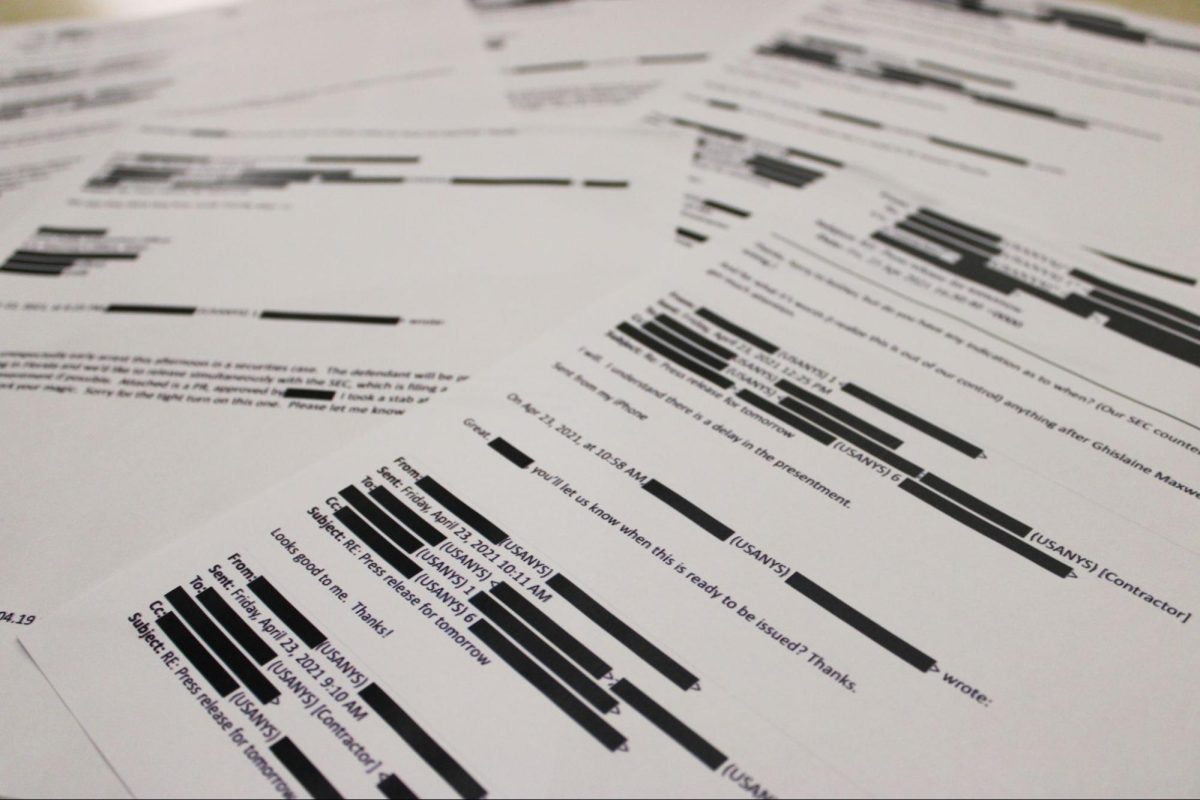
The first batch of documents were released on Dec. 19, 2025. However, many of the files accessible to the public in downloadable formats had been unreadable due to a large number of the pages being blacked out and censored.
The DOJ stated that, “redactions were to be limited to the protection of victims and their families. Some pornographic images, whether commercial or not, were redacted, given the Department treated all women in those images as victims. Notable individuals and politicians were not redacted in the release of any files,” in a letter sent to Congress.
Despite the statement, people online speculated that individuals and politicians were being protected from incrimination and association with the redactions in the files. These redactions also failed to protect victims in its initial January release.
Six people suspected of being complicit in the crimes were originally named in the redacted version of the files. They were billionaire Les Wexner, Sultan Ahmed bin Sulayem; along with Nicola Caputo, Salvatore Nuara, Zurab Mikeladze and Leonic Leonov, according to The Guardian.
“The reality is, the Justice Department acknowledged that their identities should not have been redacted. And I just thought it was important for someone to step up and say, I’m going to hold these elite, powerful men accountable,” Congressman Ro Khanna, the co-sponsor of the Epstein transparency act, told PBS News.
An X account with the handle TheEpsteinFiles, focused on exposing everyone related to the files, has gathered more than over 200k followers. The account keeps people up to date on Epstein related news.
In a recent poll it asked, “Is the release of Alien information to distract from The Epstein Files?” following Donald Trump’s recent order to direct federal agencies to release any information regarding aliens and UFO’s.
Out of 884 votes, 91% said yes, 9% said no.
Student Opinion
Students from Fresno City College voiced disapproval of the way the original files were handled.
Anthony Kramer, a history major at FCC, said it, “feels like a very big injustice for the American people.”
Kramer said the DOJ should have released the files when they first had access to them. He speculated the original redactions were to protect the high profile individuals in the files.
Nodal was frustrated that both Epstein and his accomplice Ghislane Maxwell didn’t face immediate consequences despite previous allegations about sexual abuse.
Epstein was arrested in July 2006 for soliciting prostitution and was later released in July 2009. He was arrested again on July 6, 2019, this time for federal sex trafficking charges. Both charges involved Epstein and underage individuals.
“I don’t think there’s been enough action against the people who were found to be in the Epstein Files,” Nodal said. “The fact that the FBI waited so long to release anything on Epstein when he was already a horrible human being is really disappointing.”
Nodal mentioned President Trump, who according to The New York Times, was referenced more than 38,000 times in over 5,300 files.
Cesar Martinez, an aerospace engineering major at FCC, also felt frustrated with the time it took for the files to be released.
“I feel like all of those people in there should be brought to justice and put in prison, rightfully so,” Martinez said. “The only thing that would satisfy would be arrests being made.”
Martinez urged people to look past political affiliation. He believes anyone involved should be investigated.